May 2026-05-28
Walk into a mid-sized corrugated plant on a Monday morning, and you’ll probably hear the same three frustrations: “The old stitcher jammed again on the lightweight board.” “We lost half a shift doing a size changeover.” “The customer rejected the batch because of inconsistent stitch placement.” These aren’t just anecdotes – they are the daily drumbeat pushing packaging converters toward a fundamental rethinking of their stitching departments.
The conversation has shifted. It’s no longer about “can it stitch two-piece boxes fast?” Almost any industrial stitcher can. The real discussion now centres on adaptability, intelligence, and how deeply the machine can integrate into a digital production workflow. Quietly, and with very little hype, the corrugated industry is going through a technology refresh that makes the stitching station one of the most data-rich and flexible points on the factory floor.
Three macro forces are converging: a worsening shortage of skilled operators, a boom in e-commerce packaging that demands shorter runs of highly varied sizes, and a sharpened industry focus on total cost of ownership instead of just upfront price. These forces are not cyclical. They are structural, and they are reshaping what converters look for in stitching equipment.
Full servo control on stitching heads and material handling axes is no longer a novelty. What has changed is the rationale behind it. Early adopters used servo as a selling point; today’s users are demanding hard payback metrics. A plant manager in Ohio recently told me that their servo-equipped stitcher reduced size changeover from 12 minutes to under 90 seconds – and, more importantly, made the process fully repeatable regardless of who was operating the machine. No more “Bob is the only one who can dial it in.”
The trend is moving beyond simple motion control. We’re now seeing adaptive stitch-pattern algorithms that automatically adjust wire feed speed, clinch pressure, and anvil clearance based on real-time board thickness readings. Instead of setting a fixed pressure that may be too aggressive for a lightweight E-flute or too weak for a heavy double-wall, the system profiles the material on the fly. This directly addresses the substrate variability that has plagued post-print corrugated operations for years – pre-printed sheets, especially those with heavy coverage or varnishes, can behave very differently through a stitching head than uncoated kraft.
For operations running a mix of virgin and recycled mediums, this adaptability is not a luxury. It’s quickly becoming a requirement to keep rejection rates below 2%. When exploring high-speed carton closing solutions that incorporate this level of intelligence, converters find that the initial price premium is often recovered within a single high-volume season through reduced wire waste and virtually eliminated jam-related downtime.
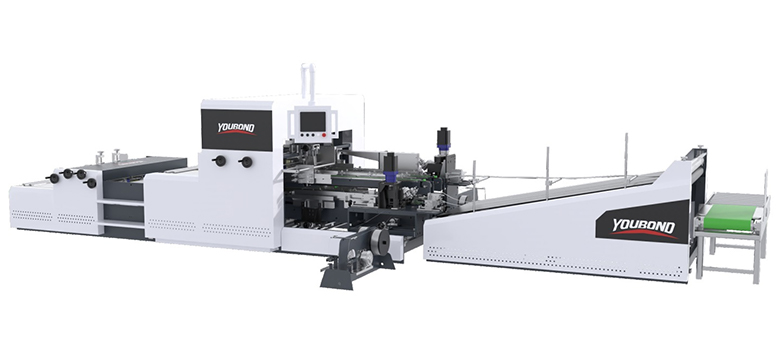
If you walked the floor at the last SuperCorrExpo, one message was unmistakable: the era of reaching into a machine with a wrench to swap dozens of stitch heads is ending. The newest generation of stitching lines uses cartridge-style stitching heads with quick-release clamps and auto-centring registration. A full head swap – not just an adjustment, but a complete swap to a different wire gauge – can be completed in the time it takes to drink a cup of coffee.
This modularity extends to the anvil and the former sections as well. Integrated laser alignment guides let a single operator adjust fold-lines and stitch placement for a new box design without trial-and-error. This is particularly critical for plants running 20 to 40 size changes per day, where every saved minute compounds into an extra half shift of production capacity per week. Packaging managers are increasingly framing the conversation not around “cycles per minute,” but around OEE improvement per shift. The stitch heads may still run at 1,200 or 1,500 stitches per minute, but if it takes half a day to change over between jobs, that headline speed means nothing.
One trend to watch closely is the integration of RFID-tagged tooling. Each stitching head carries a digital identity, and the machine’s PLC automatically loads the correct timing offsets and wear compensation values the moment it’s docked. This takes human memory and paper setup sheets out of the loop entirely. If you are evaluating advanced carton stitching systems today, the question to ask vendors is no longer “what’s the maximum speed?” but “walk me through a complete order change – from a finished batch of one size to a running good product of the next, operator starts to operator finish.”
The third trend is perhaps the most transformative in the long term: the stitching station is evolving from a “dumb” mechanical finishing unit into an active quality monitoring node. On-machine sensors now track wire tension, clinch force curves, and stitch-head vibration signatures for every single stitch cycle. This data flows into a manufacturing execution system (MES) and is time-stamped to individual box batches.
Why does this matter? Because the feedback loop shrinks from “customer complaint” to “in-cycle rejection.” When stitch quality begins to drift – say, due to wire spool inconsistency or gradual anvil wear – the system can flag the operator, divert suspect boxes to a quality lane, and in advanced setups even self-compensate for a set window before triggering maintenance. This moves the stitching department from reactive firefighting to predictive operation.
Corrugated plants serving the appliance, furniture, or automotive sectors – where a failed stitch on a heavy-duty two-piece container can result in six-figure chargebacks – are driving this adoption. One large integrated converter reduced its field stitch-failure claims by 62% in the first year after deploying sensor-equipped stitchers. The ability to provide a customer with a digital “birth certificate” of every box, showing that every stitch met a target force profile, is becoming a genuine differentiator in premium packaging contracts.
If your plant is still running mechanically timed stitchers that were installed a decade ago, you’re not just giving up speed – you’re giving up data, flexibility, and the ability to reliably run lighter, more sustainable materials. The pressure to use lightweight packaging is relentless. Thinner facings and high-recycled-content medium demand a level of process control that old-school constant-force stitching heads simply cannot provide.
The good news is that the technology has matured enough that the risk of being an “early adopter” is largely gone. The servo, quick-change, and sensing technologies are now in their second or third generation. What’s required, though, is a shift in evaluation criteria. Instead of comparing spec sheets on stitches per minute, progressive converters are asking for workflow simulations: “Given our actual order mix for the last 90 days, show me the projected changeover time and scrap savings.”
If you are aiming for a more connected, data-driven finishing operation, you may want to look into digital-ready carton stitching platforms that are built with these trends in mind from the ground up. The goal isn’t just a new machine; it’s a stitching cell that can talk to your ERP, adapt to your material, and run a shift without a veteran mechanic standing beside it.
Getting reliable guidance on the right stitching configuration for your product mix can be challenging. If you’d like to see how a purpose-built system handles your most demanding box sizes without compromise, you can check the detailed specifications and performance data for modern automated lines.
GET A QUOTE
 English
 China
China